Orientation
Where is the Palatinate?
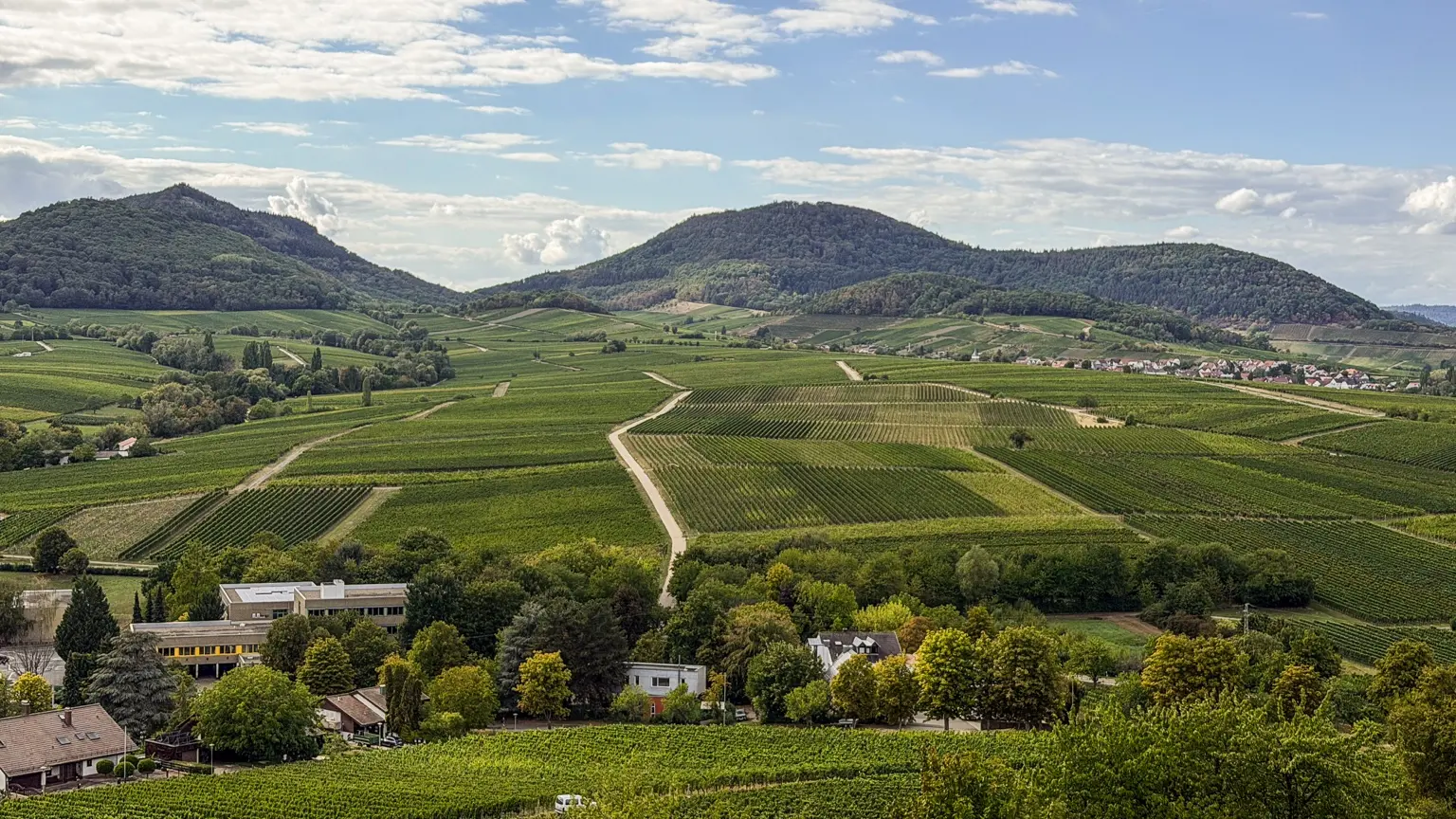
The Palatinate lies in south-west Germany, in the southern part of the state of Rhineland-Palatinate. The region borders France and stretches from the vineyards along the German Wine Route west into the Palatinate Forest.
The detailed OpenStreetMap view is loaded only when you choose to open it. This creates a connection to OpenStreetMap.
The shaded area shows the Palatinate region only. There are no route lines or individual stops on this map.
The Palatinate works best for us when every day feels a little different. Rather than moving through a checklist of sights, we combine a varied hike with a cycle ride, wine villages and good food. For a long weekend, I would choose one base and make day trips from there. The journey stays relaxed while still revealing a surprising amount of the region.
Choosing the right base for the weekend
For four days, I would not change accommodation. Distances are manageable, while packing and checking in again simply takes time. The more useful question is whether you want to focus on the Wine Route or the forest.
Stay along the German Wine Route
- Comfort and wellness: Leinsweiler Hof. The hotel sits above Leinsweiler between vineyards and forest. Indoor and outdoor pools, saunas and direct access to hiking and cycling trails make it the most comfortable base for this itinerary.
- By camper van: Weingut Hitziger in Bad Bergzabern. This inexpensive motorhome stop sits directly at a winery. It is only suitable for self-contained motorhomes with their own toilet, not caravans, tents or ordinary cars.
- Another option: Vögeli’s WeinNest. The winery in Landau-Wollmesheim combines a restaurant, seasonal wine tavern and several guest rooms. Check current room and restaurant information directly with Weingut Vögeli.
Stay in the Palatinate Forest or around Trifels
- Special: treetop houses near Annweiler. These houses stand on stilts in the forest, and some panoramic windows look towards the castles. They are part of Jugendstilhotel Trifels and work particularly well when hiking is the main focus.
- Unusual: sleep at Berwartstein Castle. You really do stay inside the castle complex. It is more of an experience than a neutral base and lies farther west, but it suits a weekend in the Dahner Felsenland.
- Personal and characterful: Landhaus 5 Weisen in Gleiszellen-Gleishorbach. The renovated country house has a 90-square-metre apartment for two to six people and lies only a short walk from the forest. It is a quiet base for castle hikes, evenings in wine taverns and the cycle ride to Wissembourg.
- Budget: Campingplatz Büttelwoog in Dahn. The campsite lies among the sandstone formations of Dahner Felsenland. The Felsland Badeparadies pool and sauna complex is only a few hundred metres away.
Friday: ease into the German Wine Route
After travelling, we do not need a packed schedule. A walk through the vines, a small wine village and a good dinner are enough. It starts the weekend without immediately creating time pressure.
Three ideas for your arrival day
- Leinsweiler: walk through the village, continue a short way into the vineyards and enjoy the view from Neukastel across the vines and Rhine plain.
- Niederhorbach: the “Wine and Nature” loop is around five kilometres long, with information boards and old wine barrels converted into the Palatinate’s own version of beach chairs. Current route details
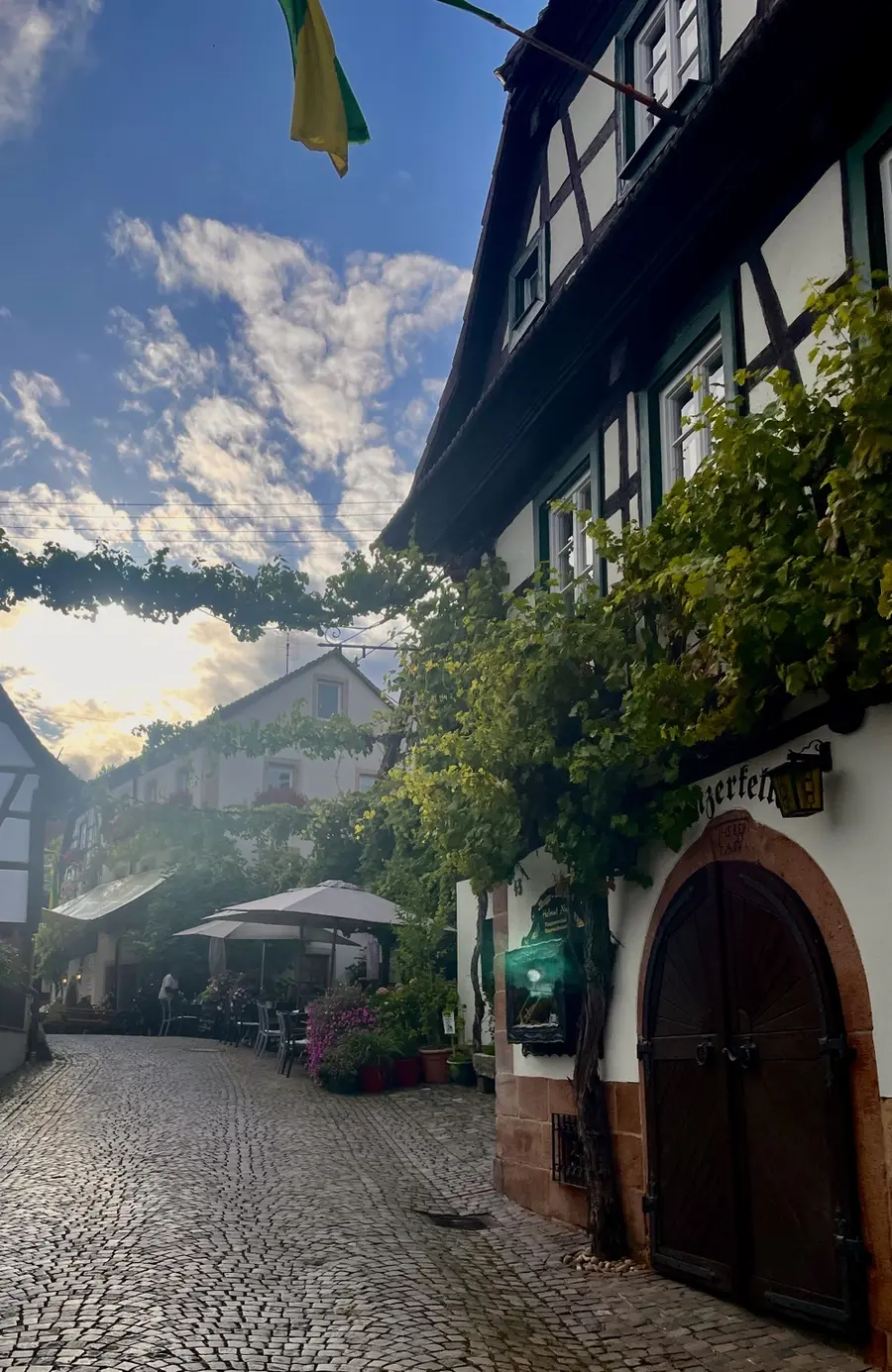
- Gleiszellen-Gleishorbach: wander along the historic Winzergasse, look at the half-timbered houses and stop at a wine tavern. The village is especially known for Muscat. On a warm evening, its vines, old houses and small courtyards create an almost Mediterranean feel.
Saturday: hike to a forest hut or castle
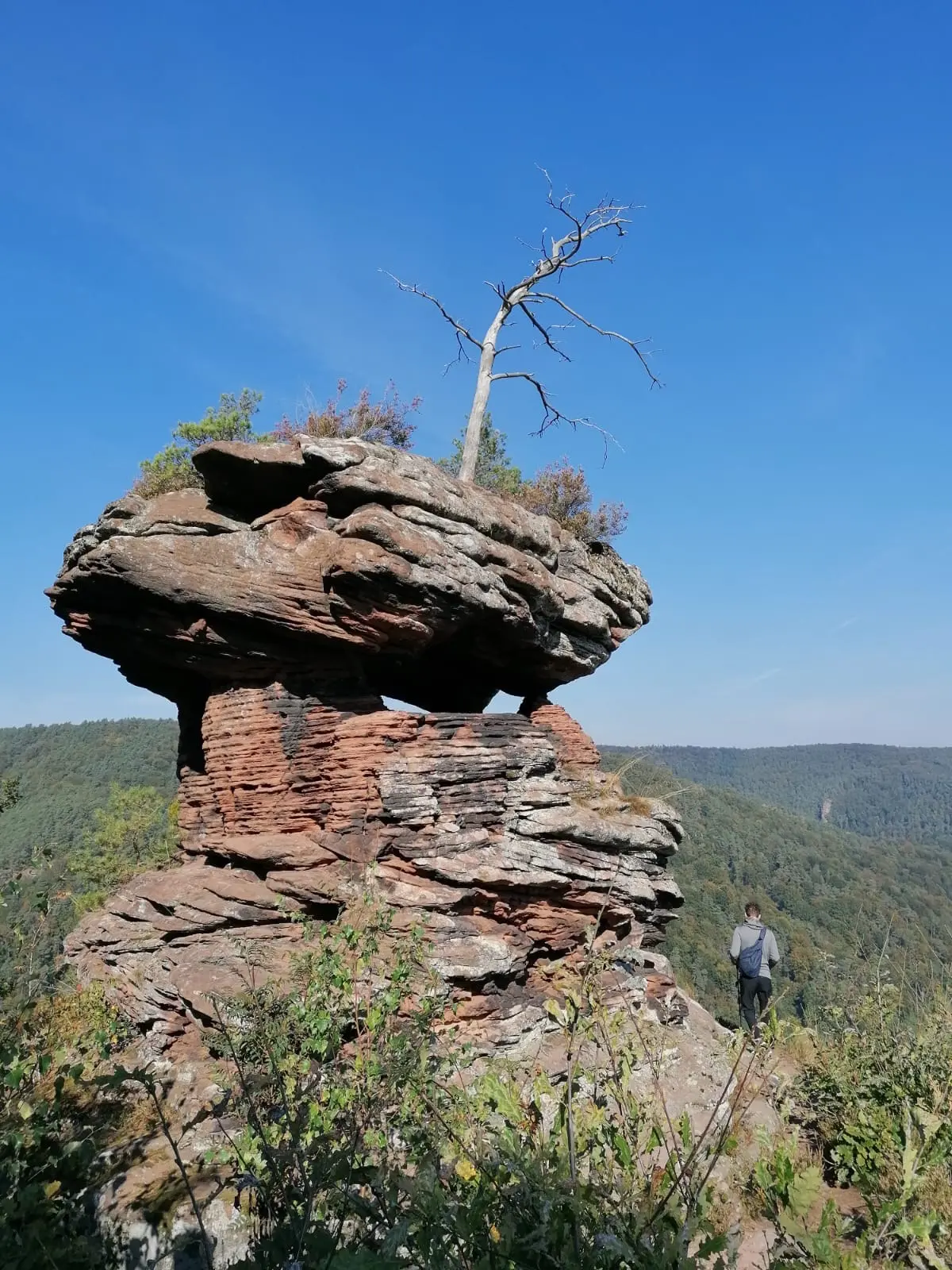
The hiking day is the centre of the weekend. Instead of choosing the region’s best-known photo spot, I would look for a route with a destination you can anticipate: a forest hut, castle or viewpoint made for a long pause. These changing highlights are what distinguish hiking here. A bend in the trail suddenly opens onto the sea of vines, a red sandstone formation rises through the trees, or a castle appears on the next ridge. These four options cover different distances and levels.
1. Palatinate Hut Trail: the full hiking day
18.4 kilometres · about 6 hours · 668 metres ascent · challenging
The long Palatinate Hut Trail starts near Albersweiler-St. Johann and links five possible refreshment stops: Ringelsberghütte, St.-Anna-Hütte, Trifelsblickhütte, Landauer Hütte and Naturfreundehaus Kiesbuckel. Between them are vineyards, forest trails and viewpoints such as Orensfels, with broad views across the forest and Rhine plain.
Choose this route for a complete day on foot and if you have enough stamina. Carry food anyway: many huts are run by volunteers and do not open every day.
2. Short Hut Trail: three huts and Orensfels
10.5 kilometres · about 3 hours 35 minutes · 471 metres ascent · moderate
The short southern loop links Ringelsberghütte, Landauer Hütte and Naturfreundehaus Kiesbuckel, with Orensfels as the landscape highlight. It leaves enough afternoon for a wine village or an unhurried meal.
3. Annweiler Castle Trail: three castles in one loop
7.7 kilometres · about 2 hours 30 minutes · 398 metres ascent · moderate
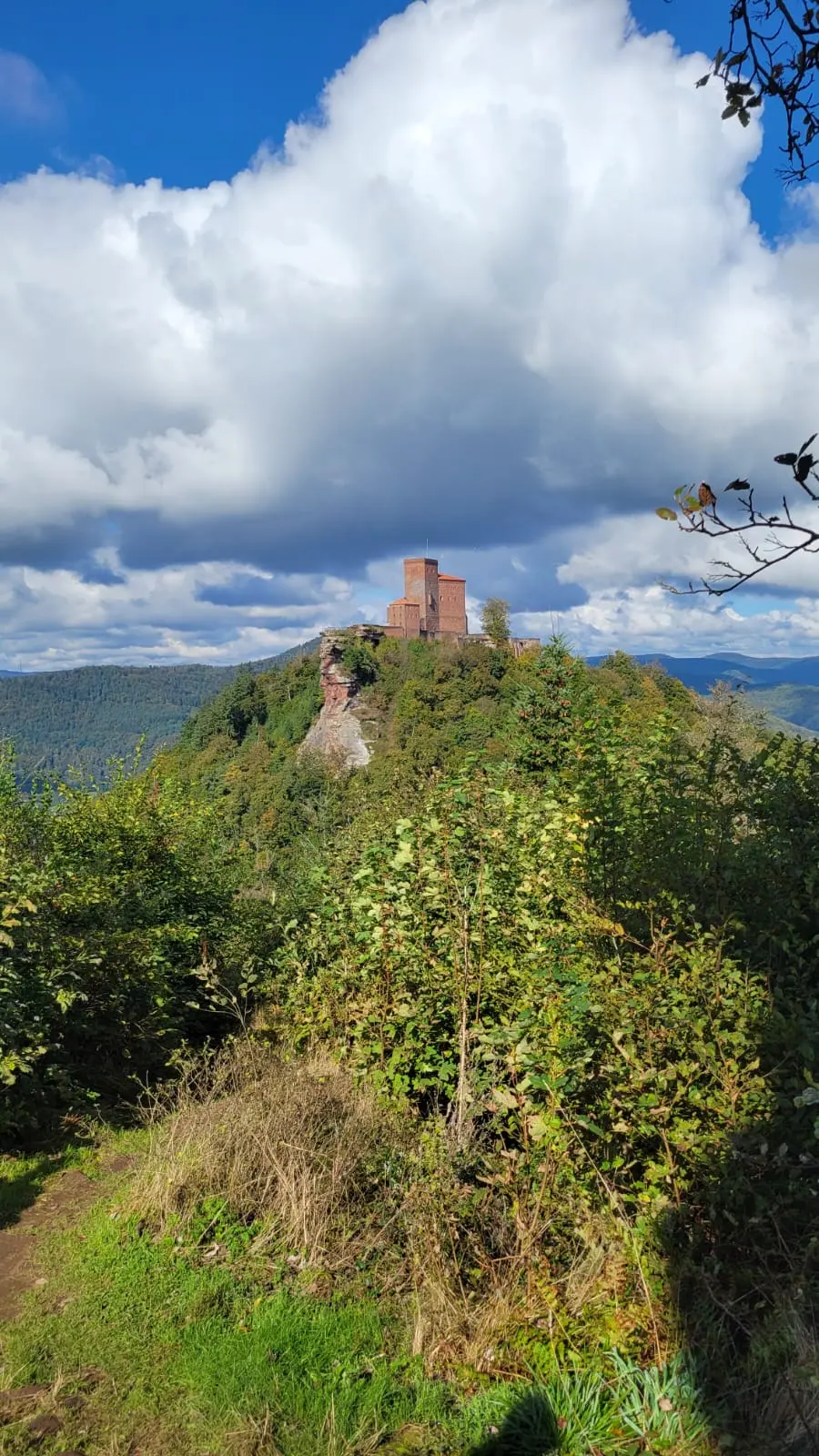
The Annweiler Castle Trail leads from Annweiler to the ruins of Scharfenberg and Anebos and on to Trifels Castle. It is much shorter than the hut trail, but still includes narrow paths and a proper climb. Changing views of all three castles give the walk a strong thread even between the ruins. Afterwards, there is time for Annweiler’s old town.
4. Nature Park Trail and Madenburg: the easy option
5.9 kilometres plus an approximately 2-kilometre detour · around 2 to 3 hours · easy
Eschbach Nature Park Trail 4 begins at the Madenburg hiking car park and links several viewpoints. From the car park, it is roughly another kilometre to Madenburg itself. That turns the castle tavern into a genuine hiking destination rather than a stop beside the car. Forest edge, vines and wide South Palatinate views alternate along the way.
Sunday: cycle across the border to Wissembourg
On the second full day, we deliberately change the pace. A cross-border ride combines vineyards and small South Palatinate villages with a French destination. Wissembourg works especially well because you can walk through the old town and beside the River Lauter, stop for food and cycle back afterwards.
How long the day becomes depends on where you start:
- From Bad Bergzabern: loops are often around 43 to 44 kilometres with roughly 400 to 500 metres of ascent.
- From Oberotterbach: depending on the loop, much shorter versions of around 19 to 25 kilometres are possible.
- From accommodation farther north: drive with the bikes to Bad Bergzabern or Oberotterbach to avoid unnecessary connecting kilometres.
Before setting off, check distance, elevation, surface and the actual start point once more. Bring a lock so that you can explore Wissembourg on foot.
For a sweet stop, Pâtisserie Daniel Rebert is right in central Wissembourg. If there is time for a full meal, Au Moulin de la Walk, beside an old watermill, fits the ride particularly well. Check opening hours and reservations first.
Monday: a short walk or some wellness
I would not schedule a second big hiking day before travelling home. Depending on your base, these options work well:
- Landeck Castle: from Klingenmünster, short walks and loops of roughly five to ten kilometres are possible. Check the castle and restaurant on the operator’s website.
- Leinsweiler Slevogt Trail: for a short finish, follow the approximately 2.5-kilometre loop from Slevogthof past the family grave, Neukastel ruins and Hexentanzplatz. With more time, extend it to about 5.8 kilometres via Wettereck and Slevogtfelsen. Panels beside the path show paintings by the Palatinate artist Max Slevogt, allowing you to compare his motifs with today’s landscape. Trail details
- Dahner Felsenland: combine a short sandstone walk with the pool and sauna area at Felsland Badeparadies. This works especially well when staying in Dahn.
- Simply enjoy the morning: have breakfast in a wine village, buy a few bottles directly from a winery and leave without adding another activity.
Palatinate food and places to stop
For us, stopping for food is not merely refuelling. It can be the destination of the walk. A few fitting examples:
- Madenburg tavern: Palatinate dishes and tarte flambée with a wide view. Access to the whole castle complex is tied to the tavern’s opening hours.
- Landeck Castle tavern: a rustic stop inside the castle. Operators and opening hours have changed in recent years, so check the latest information.
- Vögeli’s WeinNest: restaurant and seasonal wine tavern at the winery in Landau-Wollmesheim.
- Schoggelgaul in Pleisweiler: cooking with Palatinate and Alsatian influences, fitting the cross-border theme around Wissembourg.
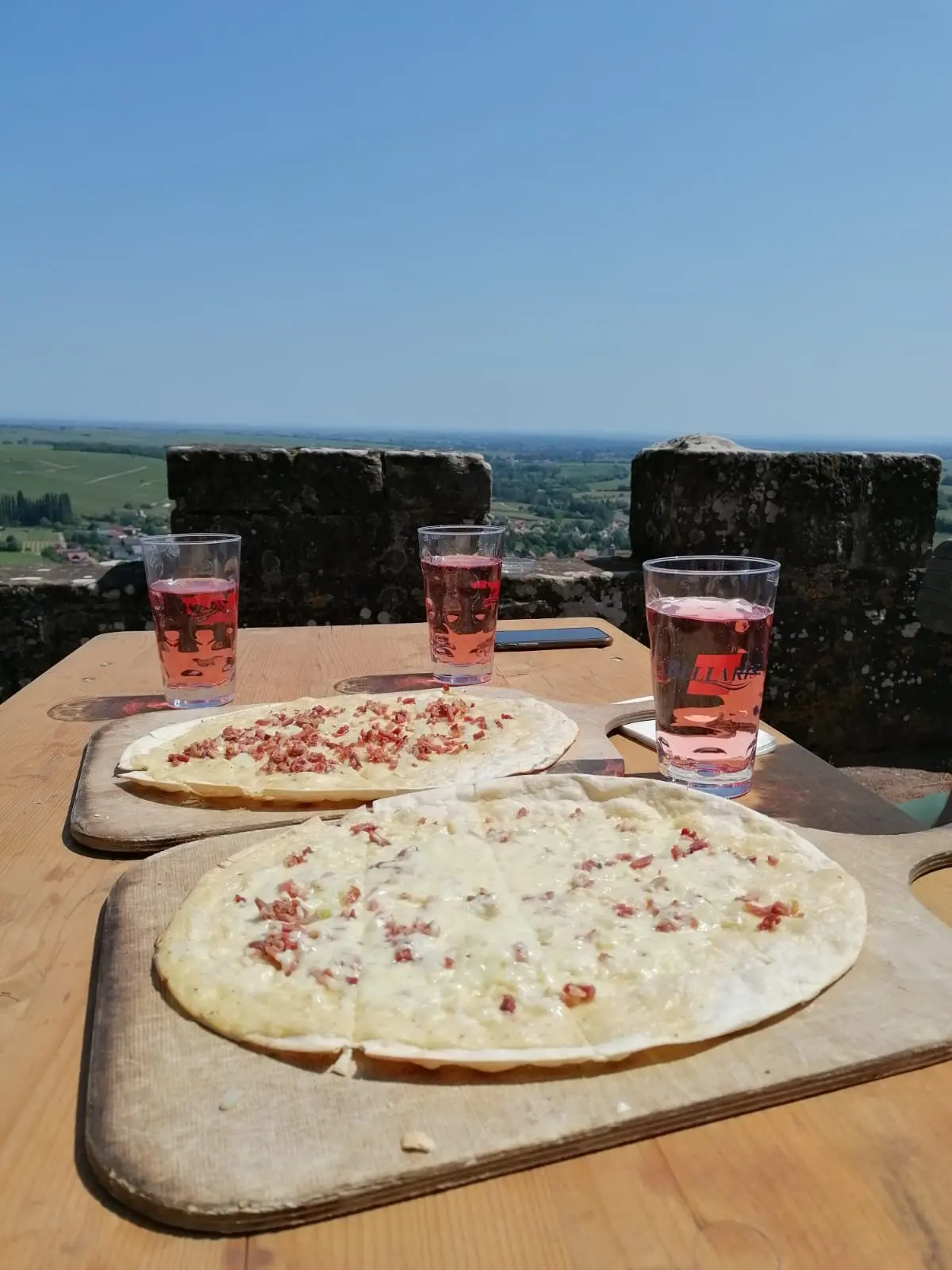
Other regional staples include Saumagen, Fleeschknepp, white cheese with potatoes and, in autumn, dishes with Keschde (sweet chestnuts). Saumagen sounds more intimidating than it tastes: potatoes, pork and seasoning are cooked inside a pig’s stomach, then usually served in slices with sauerkraut and mashed potatoes.
Practical tips for a long weekend
- Accommodation: one base is enough. Leinsweiler or Gleiszellen-Gleishorbach are particularly practical for combining the Wine Route, hiking and Wissembourg.
- Reservations: book hotels, unusual stays and restaurants early for public-holiday weekends.
- Forest huts: never rely on a single refreshment stop. Check opening hours and trail closures on the day.
- Cycling: save the route offline and carry lights, a lock, a spare tube and enough water.
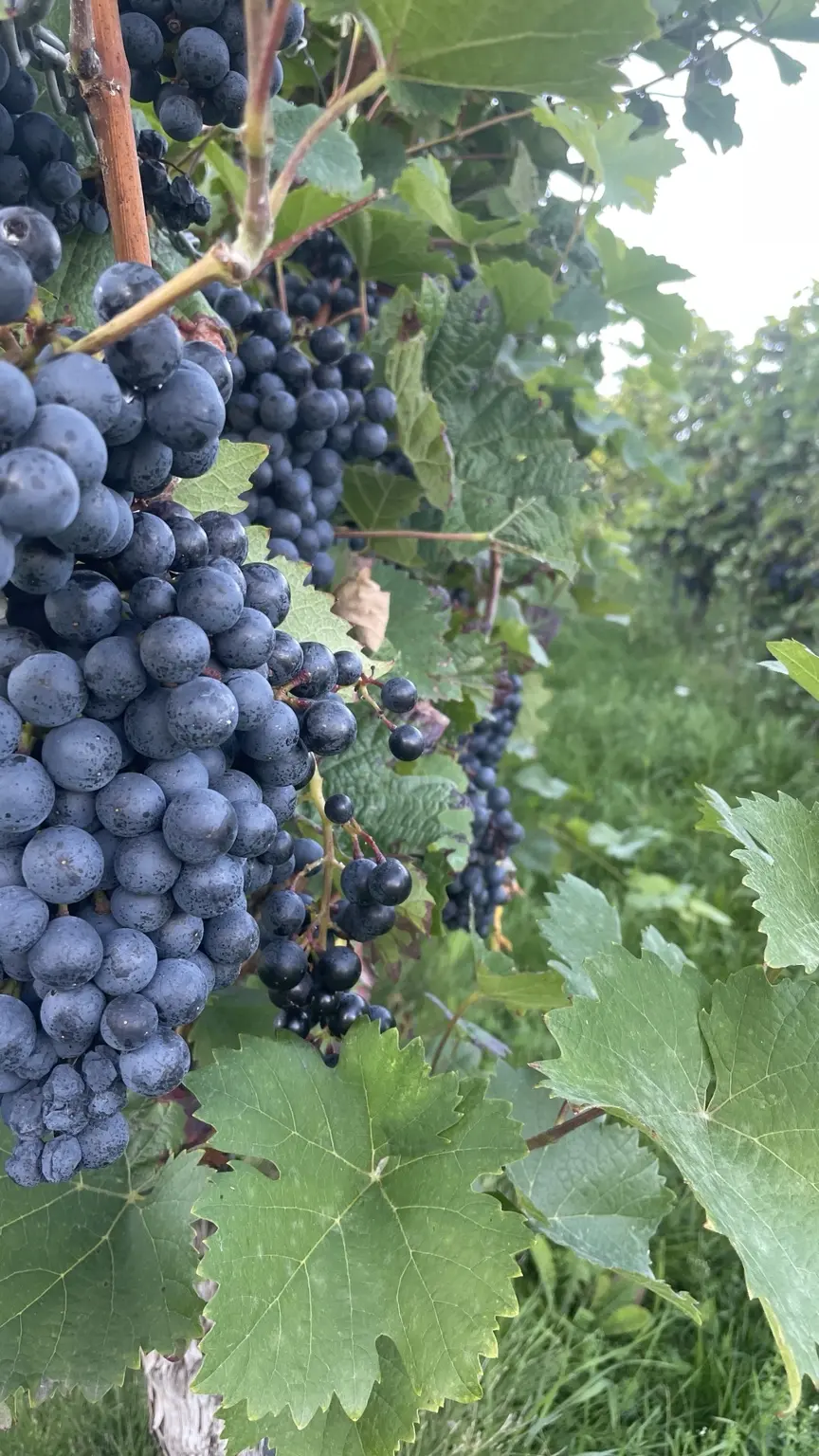
- Best time: almond blossom in March and April gives the Wine Route a light spring atmosphere. Summer suits long evenings, cycling and outdoor dining. Autumn brings the grape harvest, new wine and Keschde (sweet chestnuts), but popular weekends are considerably busier.
- Festivals: wine festivals run from spring into autumn. In October, the Keschdefeschd in Annweiler and other chestnut markets fit especially well. Check current calendars and reserve accommodation early.
- Respect the landscape: stay on marked paths, keep dogs on a lead, leave farm and emergency access clear and take all rubbish away.
Conclusion: a weekend built on variety
The Palatinate does not need one spectacular centrepiece. The mixture makes the trip: vineyards on the first evening, a forest hut or castle the next day, cycling into France and a short walk or sauna before travelling home.
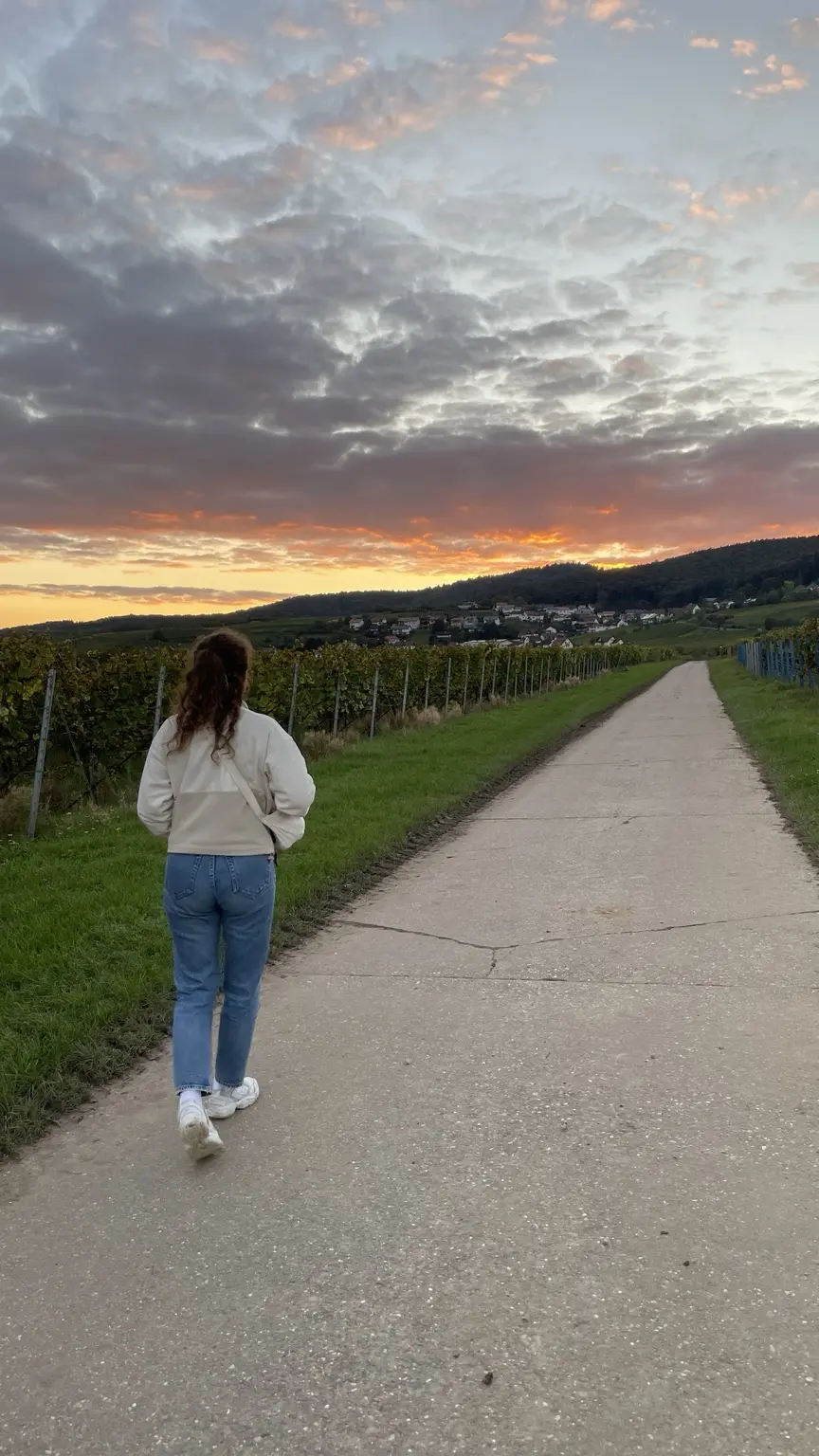
I would rather choose one hike carefully and leave enough time for a proper stop than try to tick off every castle and village. That keeps the Palatinate what it is for us: grounded, enjoyable and wonderfully varied.