This route deliberately combines very different experiences: a modern city, rainforest, river safaris, a simple beach retreat and a final city stop. We wanted variety without rushing through several countries, so we gave each part of the trip enough time.
Our 14-day Singapore and Borneo itinerary
- Singapore: arrival day and two full days
- Sepilok: Rainforest Discovery Centre and wildlife sanctuaries
- Kinabatangan River: two nights with several boat safaris
- Kota Belud: three quiet nights at Bigfin Beach Resort
- Kuala Lumpur: two full days
- Singapore: connection and flight home
Days 1–3: Singapore’s gardens, neighbourhoods and food
We landed early in the morning and quickly realised that an overnight flight followed by tropical heat is not the ideal recipe for energetic sightseeing. Our hotel room was not available until 3 pm, so we took a ride to the Singapore Botanic Gardens. The park gave us an immediate introduction to tropical plants, birds, turtles and monitor lizards, but the humidity felt much tougher than expected after a sleepless flight.
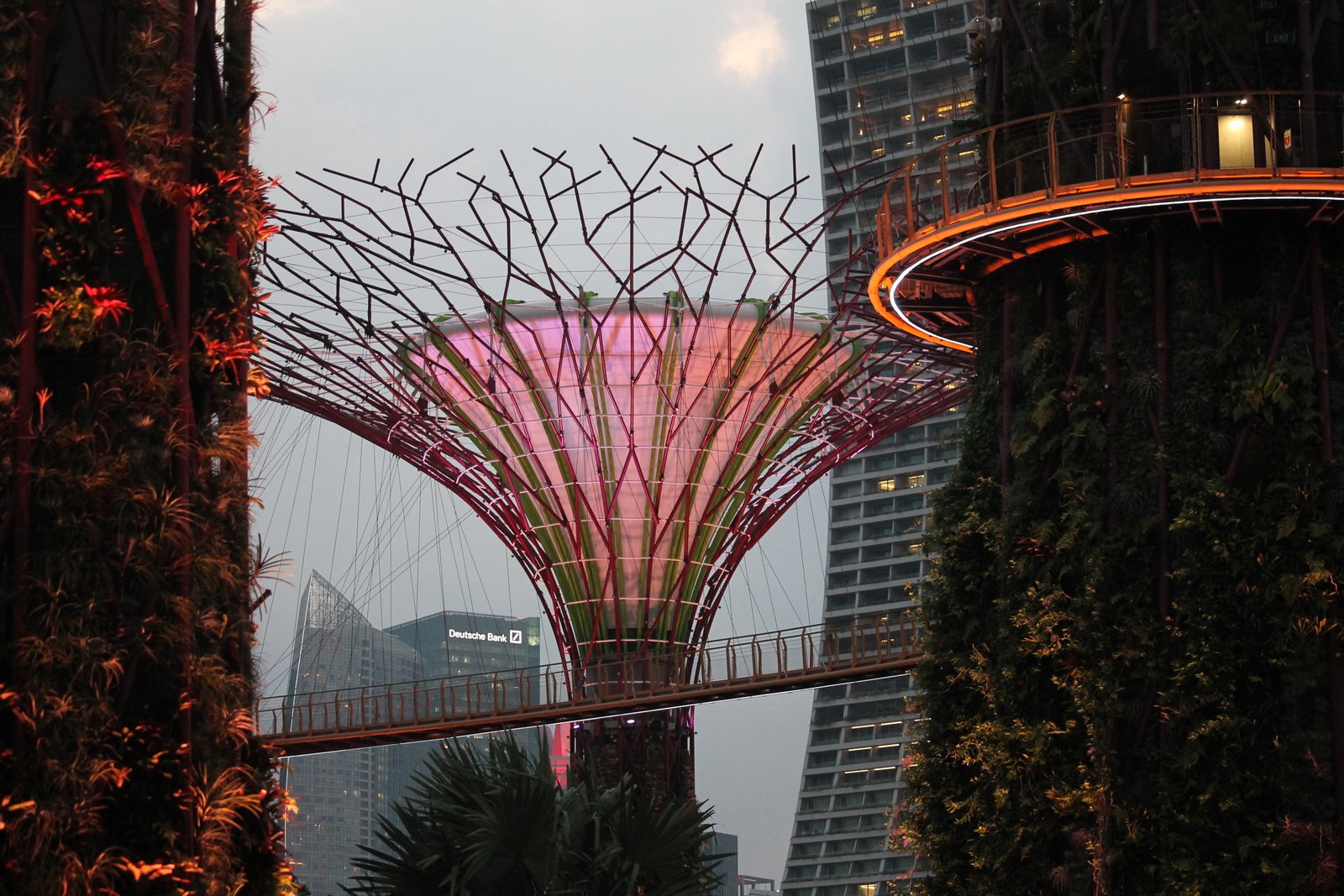
Once we could finally check in, we slept for a while and took the MRT to Gardens by the Bay in the evening. Dumplings and grilled skewers at the nearby food stalls helped us feel human again before we watched the Supertree light show. Our tip: do not stand directly underneath the trees. The raised steps and balconies provide a much better view of the full show and Marina Bay Sands.
A walking tour, Maxwell Food Centre and Cloud Forest
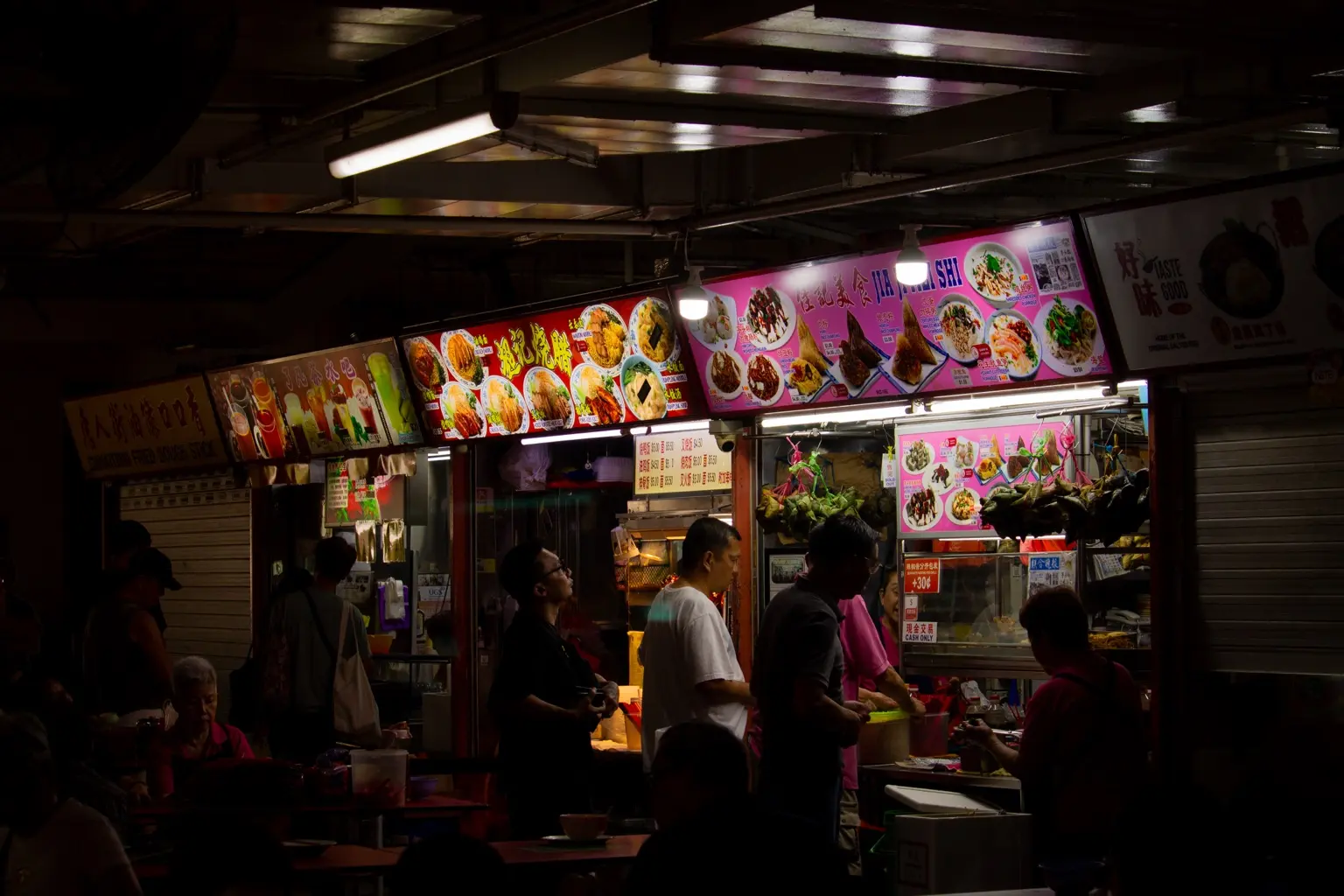
The following morning, a free walking tour introduced us to Chinatown, Little India and central Singapore. It was a useful way to understand the city’s different cultures and the role hawker centres play in everyday life. We returned to Maxwell Food Centre more than once because the choice was huge and everything we tried was good.
We also visited Cloud Forest. The indoor mountain and waterfall are impressive, but for us the admission price of around €40 was not worth it. It was crowded during our visit and, knowing that Borneo’s real rainforest was only a flight away, the staged version did not have quite the same effect.
Chinatown, Raffles and Lau Pa Sat
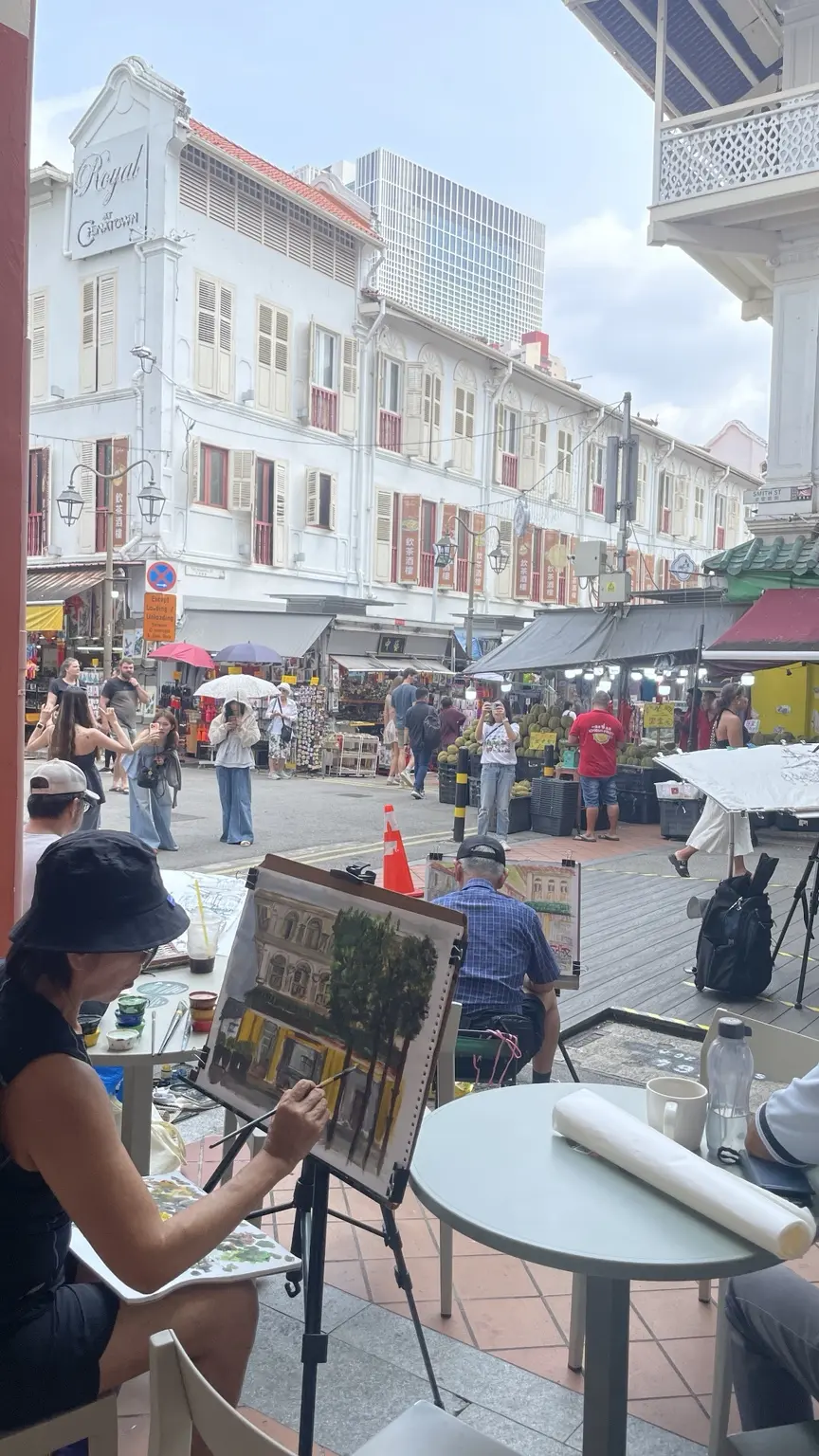
On our third day, my partner joined a food tour while I stayed in Chinatown because I was not feeling completely well. I watched street artists paint the historic houses and market scenes, then we met again for Hainanese chicken rice at Maxwell Food Centre. Honestly, the pak choi stayed in my memory more than the chicken.
We continued to Raffles Hotel and ended the day at Lau Pa Sat. It was Saturday and exceptionally busy, with additional tables filling the streets. The noise, food smells and crowds made it an entertaining last evening in the city. Two full days plus the arrival day worked well for us, although arriving in the evening would have made the start considerably easier.
Days 4–7: Sepilok and the Kinabatangan River
After a surprisingly calm visit to Changi’s Terminal 2, we flew to Sandakan and continued to Sepilok. Accommodation is limited and several properties have very similar names, so booking early and checking the exact location is worthwhile.
Rainforest Discovery Centre
No double room was available at Borneo Sepilok Rainforest Resort, so we booked a six-bed room. Nobody else moved in, which meant we had the dorm to ourselves. The next morning, we walked along the elevated canopy paths at the Rainforest Discovery Centre. After Cloud Forest in Singapore, being surrounded by an actual rainforest felt completely different.
Wildlife along the Kinabatangan River
A small bus collected us around midday for the drive to the Kinabatangan River. Hornbill Lodge was the expensive, more luxurious stay of this trip, but meals and all tours were included. Our double room had a balcony overlooking the river.
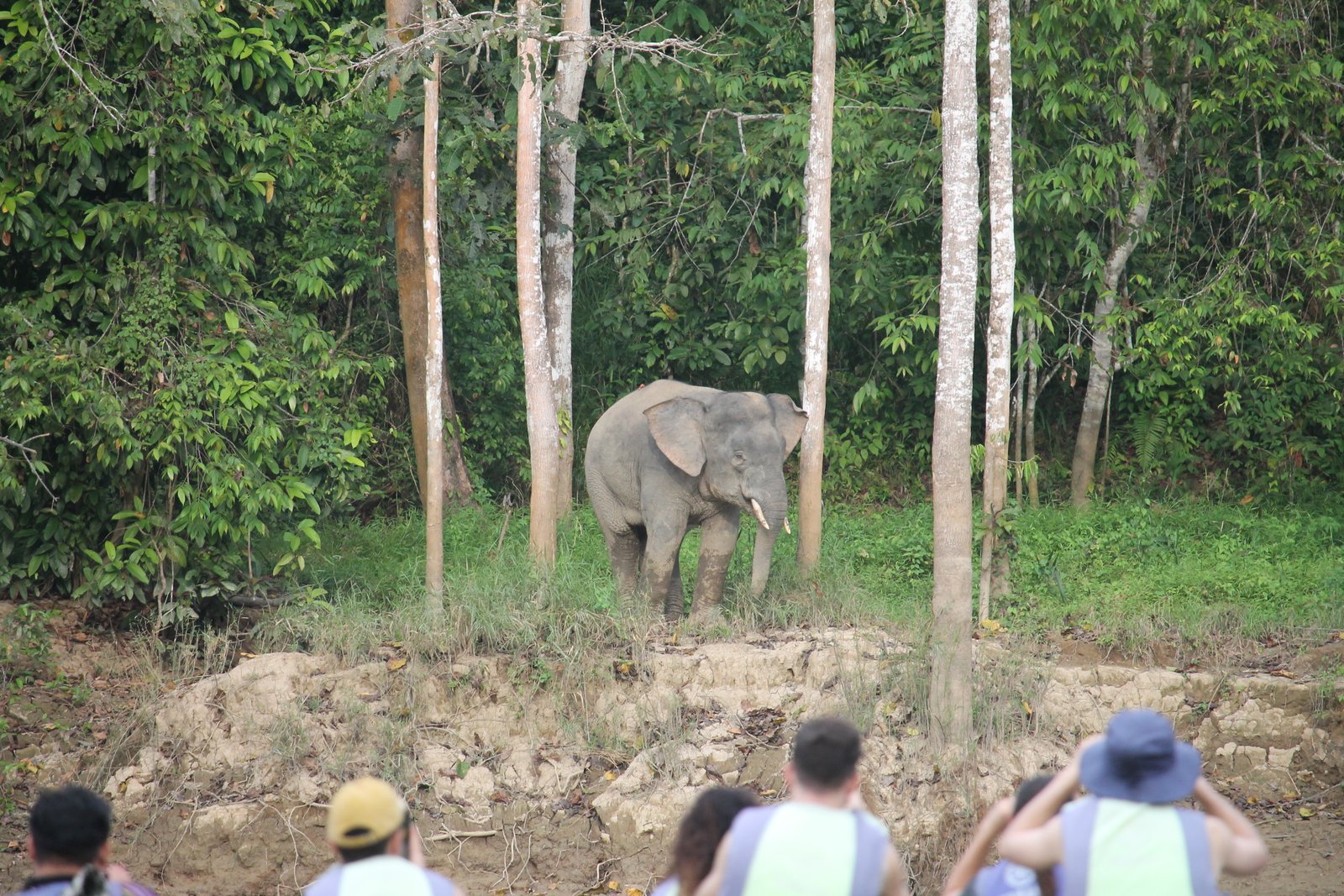
On our first boat safari, a guide pointed out an orangutan far away in the trees. We could barely make it out, but a little later we were incredibly lucky: Bornean pygmy elephants appeared by the riverbank. Word travelled quickly between the boat drivers, and more boats soon arrived. We could not watch the animals quietly for long, but seeing them in the wild remains one of the most memorable moments of the journey.
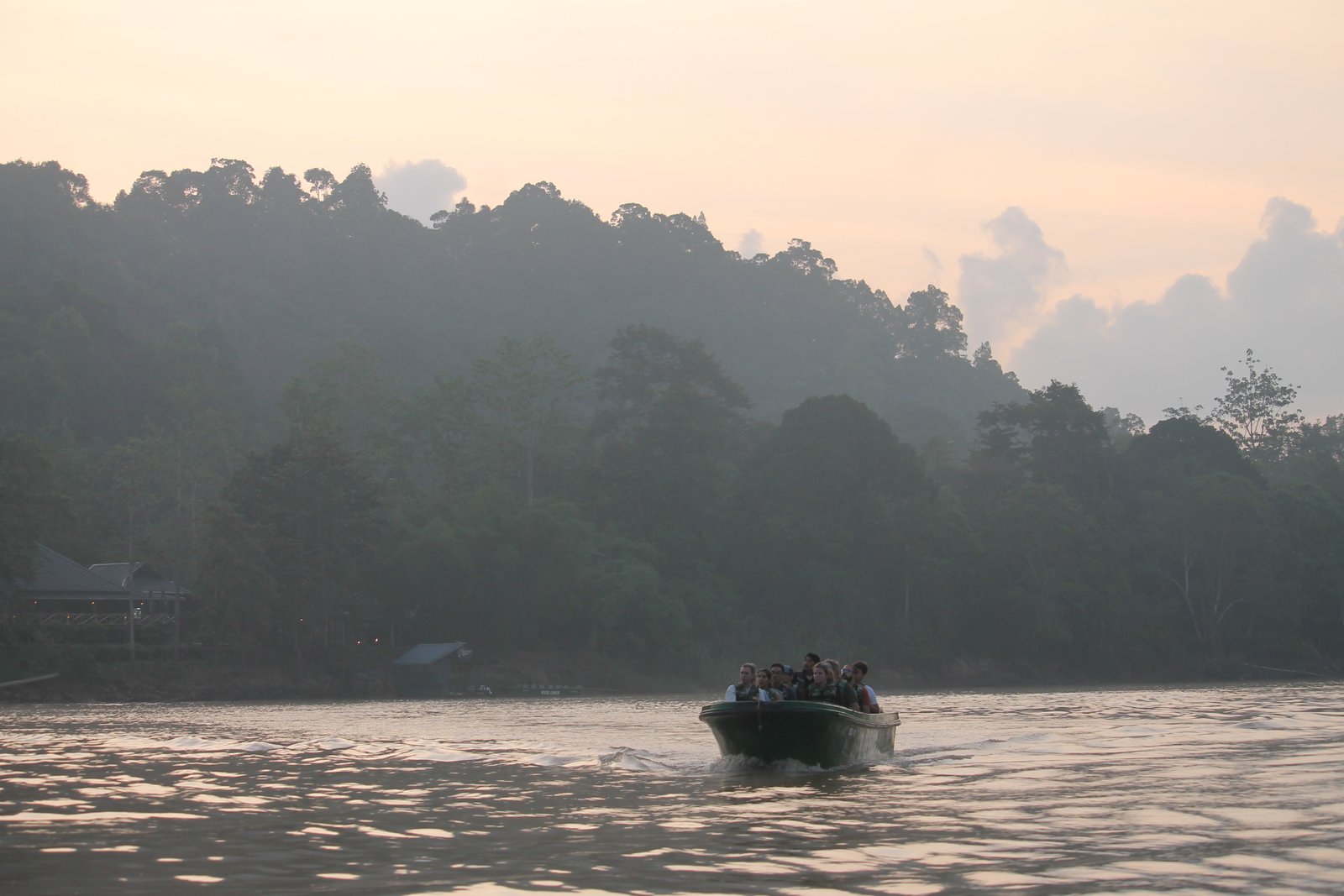
During the following cruises, we spotted macaques, proboscis monkeys, crocodiles, otters, monitor lizards and several kinds of hornbill. A camera with a good zoom is genuinely useful because many animals sit high in the trees or on the opposite bank. The final safari started around 6:30 am. We saw fewer animals, but mist floated above the river while the sun slowly rose over the rainforest. That atmosphere alone justified the early alarm.
Orangutans, sun bears and a night walk
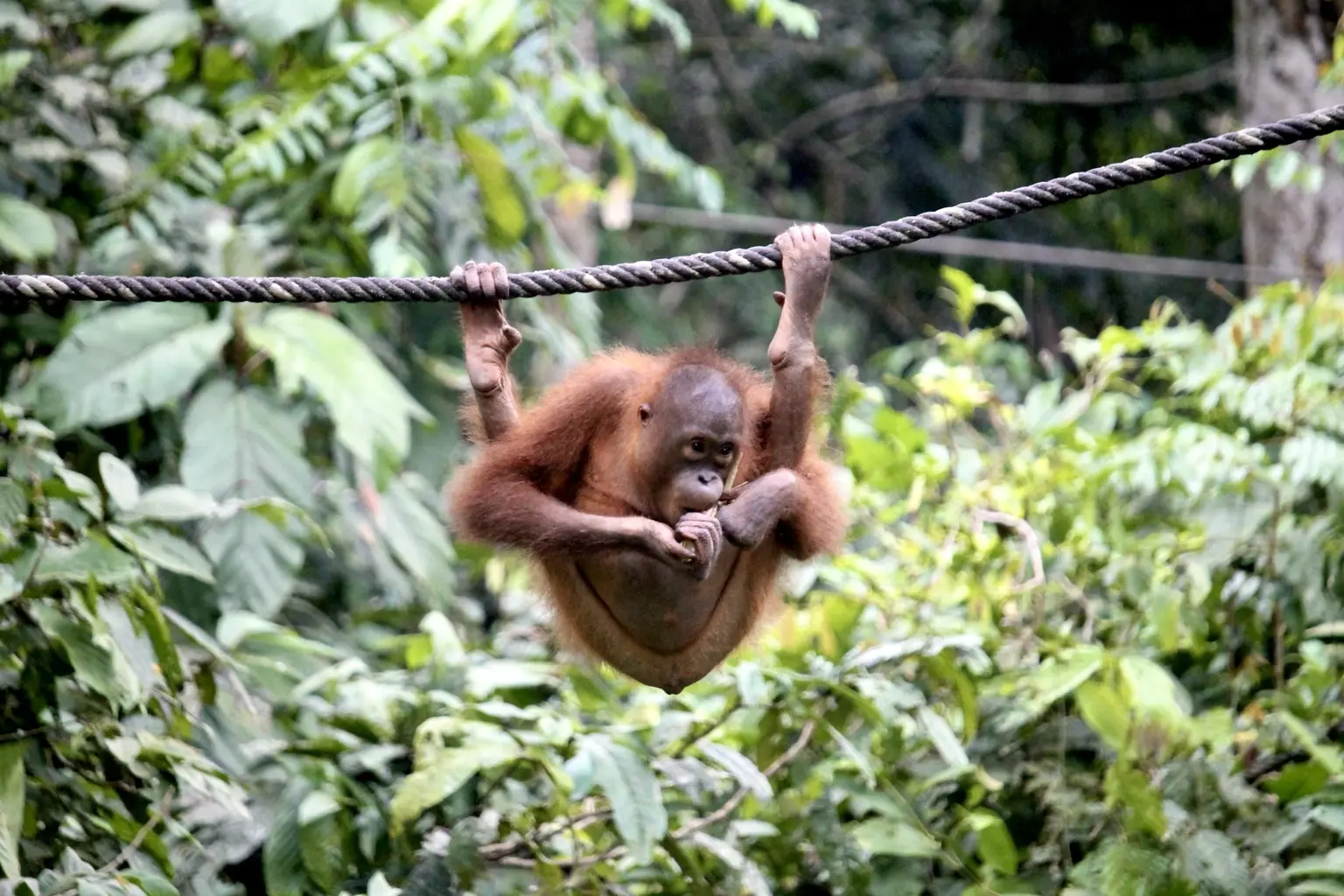
Back in Sepilok, we visited the Orangutan Rehabilitation Centre in time for the feeding. Watching the orangutans move freely through the forest, especially the younger ones nearby, was fascinating. Check the current opening and feeding times before visiting because the centre closes fairly early.
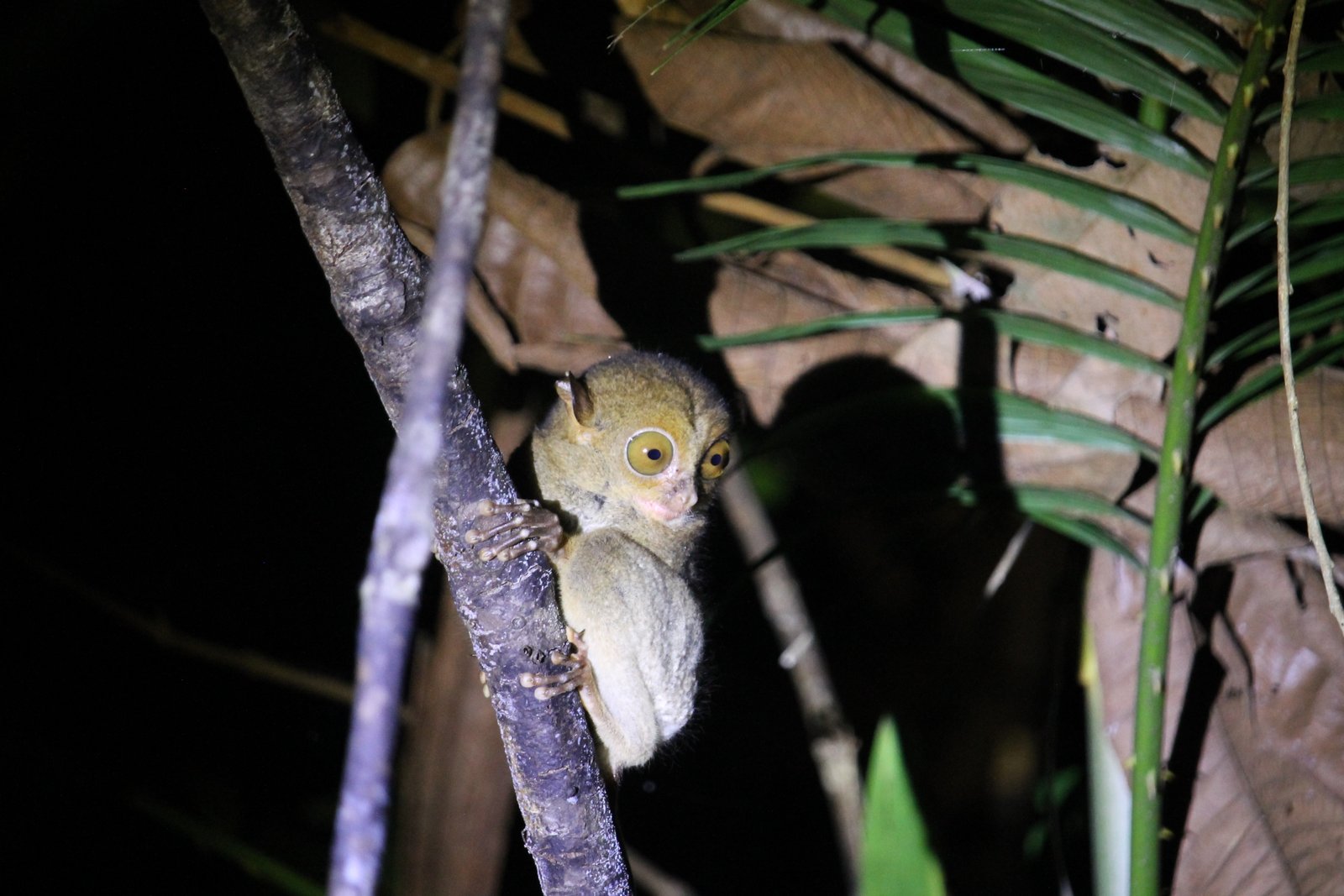
That evening, we went to the Rainforest Discovery Centre and asked about the guided night walk. We should have reserved in advance but were lucky enough to get the final two places. We spotted tiny tarsiers and several venomous snakes. This was one of the best activities of the entire trip. The next day, we also visited the Bornean Sun Bear Conservation Centre before flying from Sandakan to Kota Kinabalu.
Days 8–10: Bigfin Beach Resort, a secluded Borneo hideaway
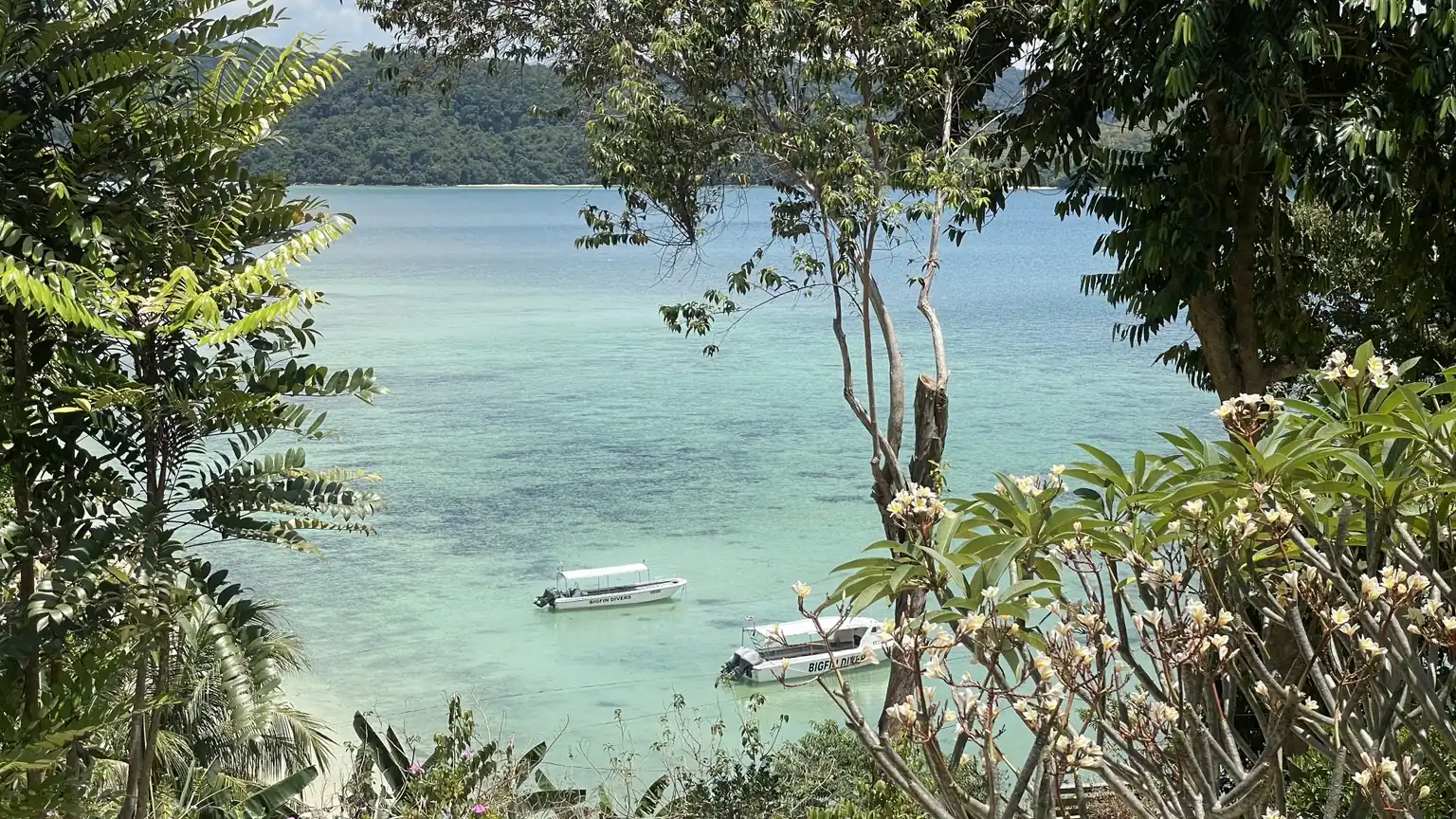
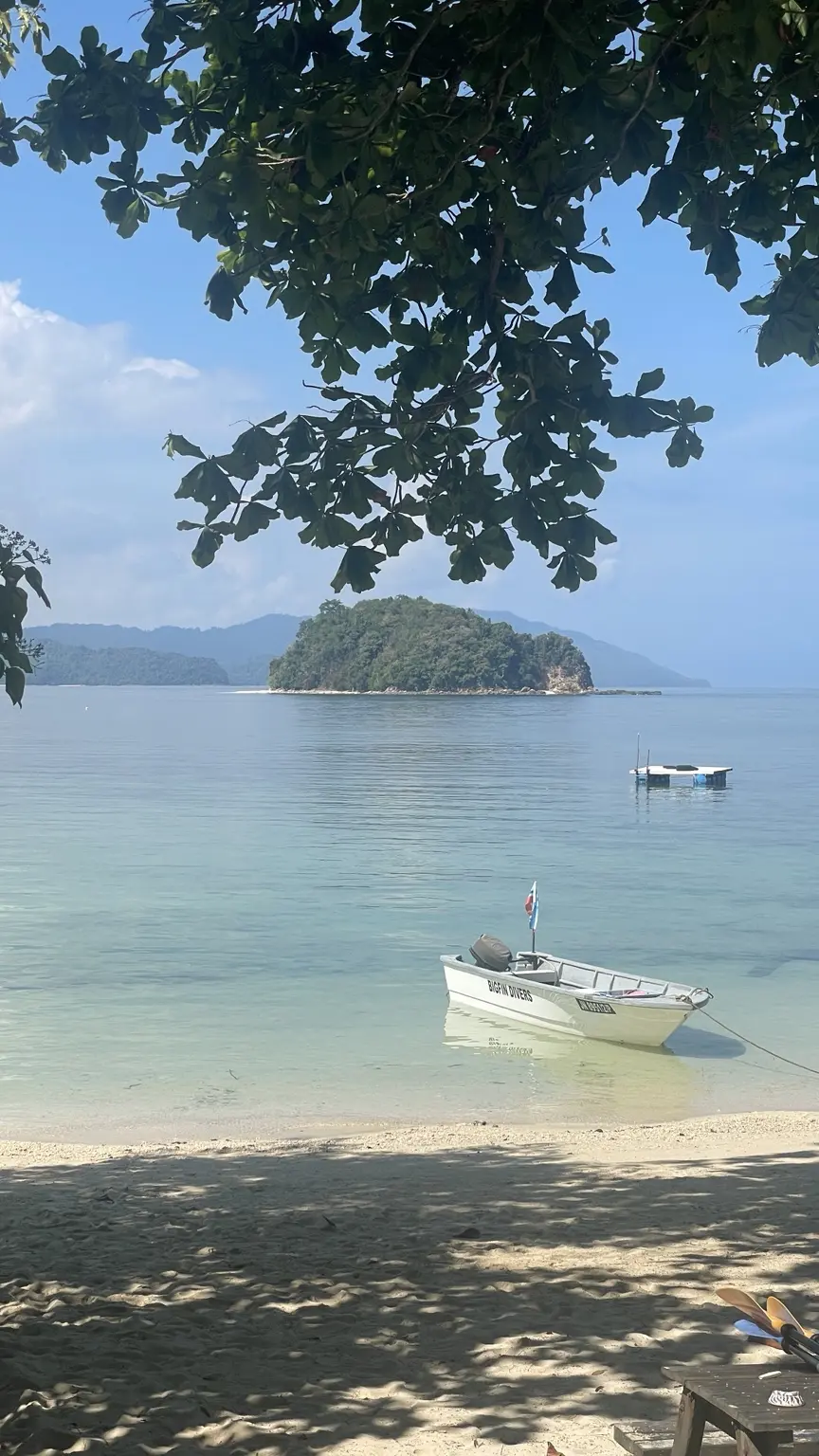
After flying to Kota Kinabalu, we continued with a transfer arranged by Bigfin Beach Resort and arrived just in time for sunset. The resort sits in Mengkabar Bay near Kota Belud, roughly 60 kilometres north of Kota Kinabalu. There is no road to the property: the final part of the journey is by boat. That is inconvenient in exactly the right way.
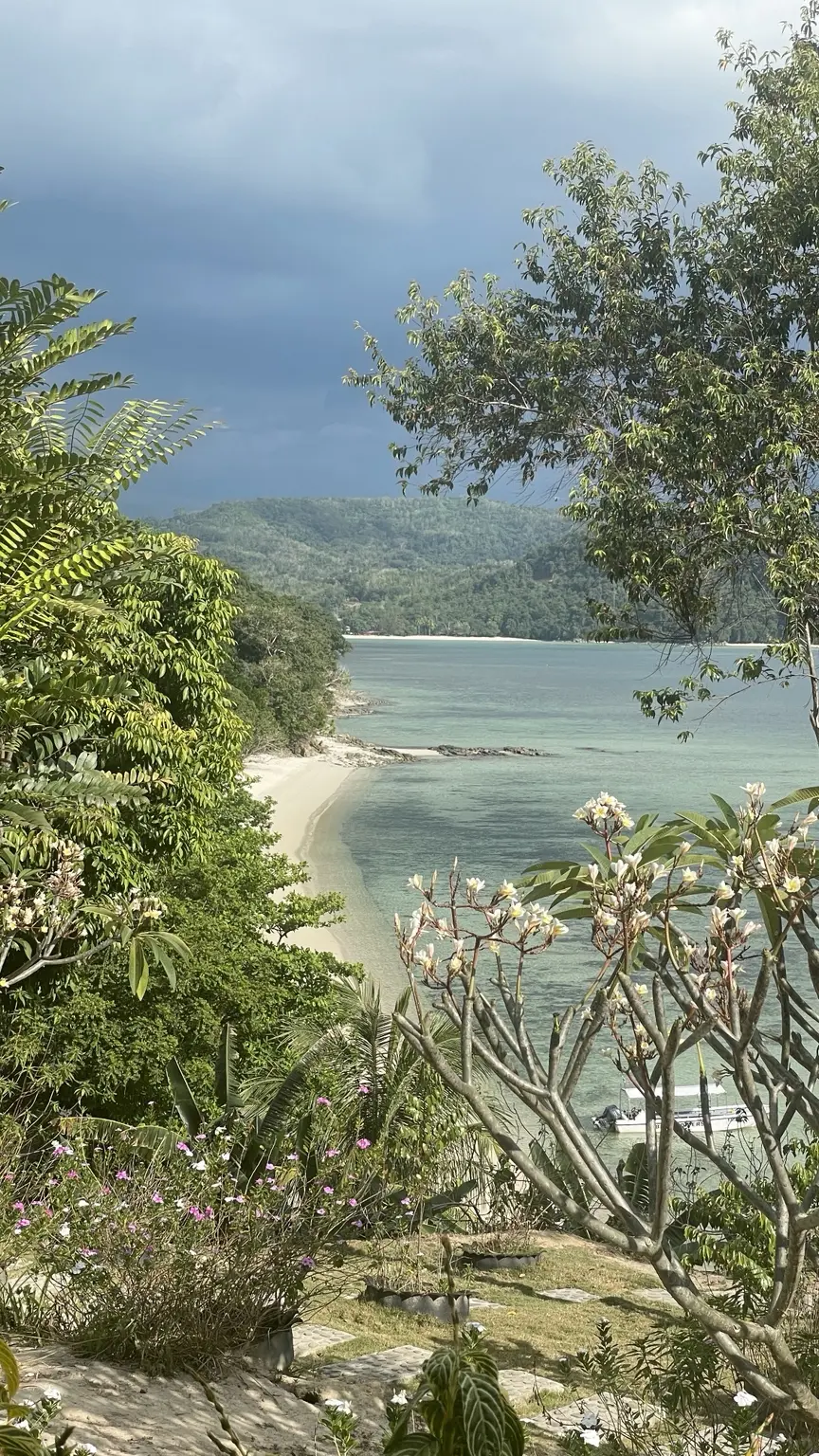
Bigfin has only eight private hillside chalets overlooking the bay, Pulau Pandan and, in clear conditions, Mount Kinabalu in the distance. With around ten to fifteen travellers during our stay, it felt more like a small shared hideaway than a conventional resort. We met the other guests over dinner on the first evening. Meals were simple Malaysian dishes served communally, with vegetarian or vegan options and a meat dish.
Who Bigfin Beach Resort is right for
This is not a polished luxury hotel. The chalets are simple, most use a fan rather than air conditioning, and the remote property has to manage electricity and supplies carefully. That simplicity is part of the experience: tropical forest behind you, a beach below and no nearby town competing for your attention.
Bigfin is also a PADI dive resort. Diving, snorkelling trips, kayaking and stand-up paddleboarding can be arranged, while non-divers are equally welcome. We had planned to snorkel, but the reef directly in front of the resort had reportedly been badly damaged by a typhoon several years earlier. Diving was possible, but we did not want to make an unplanned first dive there.
When the itinerary turns into doing nothing
We decided to stay at the beach, possibly rent a kayak later and try snorkelling anyway. None of that happened. My partner managed to get a strong sunburn while sitting under a tree without enough sun protection, so we spent considerably more time in the shade after that.
There were warning signs about box jellyfish at the beach. Take them seriously and follow the resort’s current advice, particularly regarding protective clothing. I felt a small sting while leaving the water, although we could not determine whether it came from a box jellyfish or another species.
Our active plans quietly disappeared. We read, watched the sea and enjoyed having nowhere else to be. Bigfin worked so well in this itinerary precisely because it was the opposite of Singapore and the wildlife-packed days before it. If you are looking for a remote, sociable and rustic place rather than a full-service beach hotel, it is a genuine Borneo hidden gem.
Days 11–13: Kuala Lumpur
Leaving Bigfin involved a boat ride followed by a taxi to Kota Kinabalu Airport. We departed early because the journey takes time, only to discover that our flight was delayed by three hours. The airline gave us a McChicken as an apology, which was at least a new travel experience.
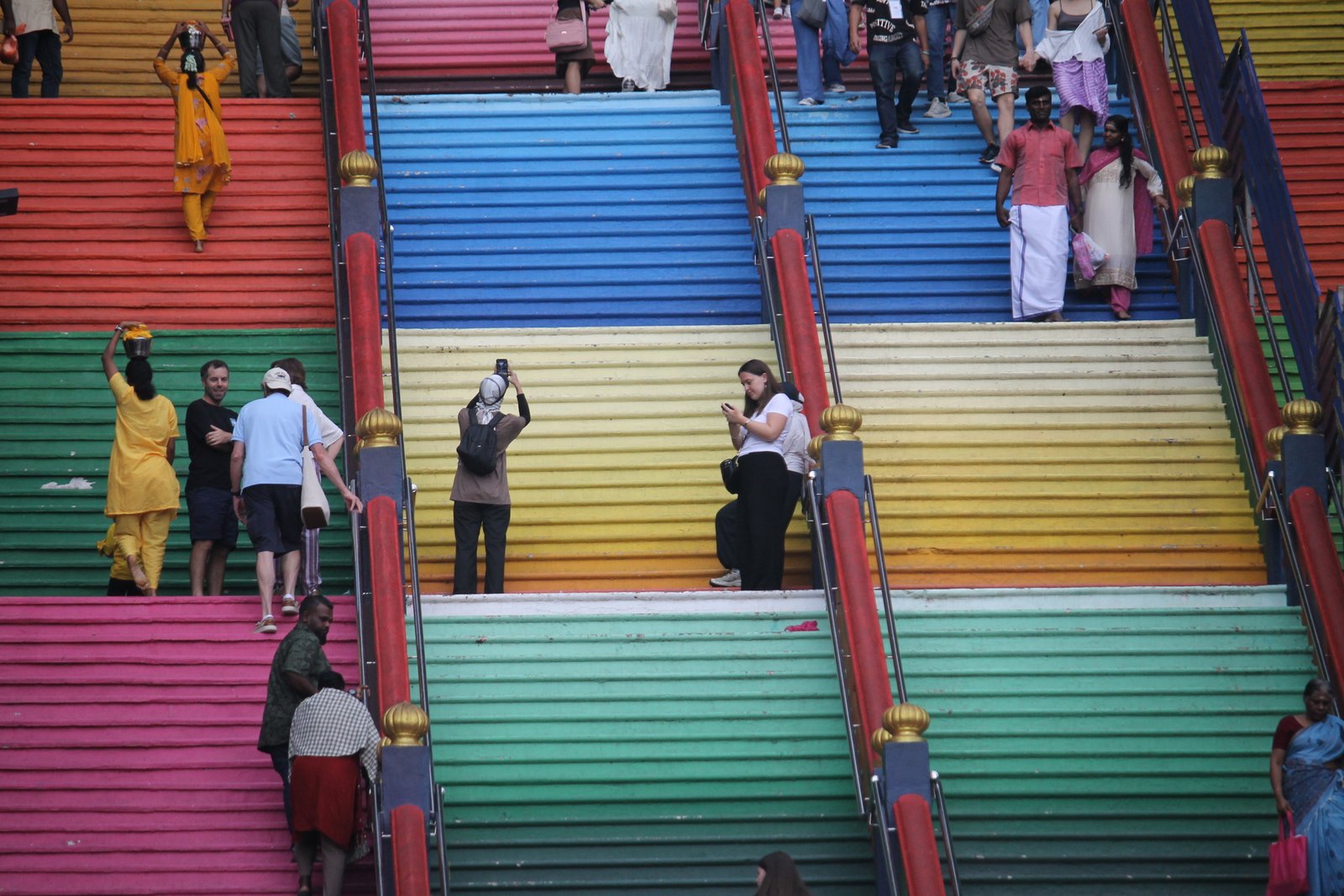
We reached Kuala Lumpur late and went straight to bed. The next morning, we visited the Batu Caves before the colourful staircase became too crowded. Remember to cover knees and legs; I had forgotten my long skirt and bought one near the entrance.
A mosque tour and the Petronas Towers
One of our favourite experiences in Kuala Lumpur was the free guided tour at Masjid Wilayah Persekutuan. Appropriate clothing was provided, and our guide explained the mosque and Islam clearly, answered every question patiently and even allowed us to observe a prayer. It felt welcoming, informative and far less rushed than many major sights.
We had booked tickets for the Petronas Towers in advance. The evening view over the illuminated city was worth it. Afterwards, Jalan Alor was too busy for us to choose a restaurant calmly, and we accidentally sat at the tables of a different restaurant than intended. Unsurprisingly, this was not our best meal.
Walking tour, temples and excellent food
The next day began with breakfast at The Breakfast Spot, followed by a very entertaining free walking tour. Our guide took us through Chinatown, used the metro with us and supplied a long list of restaurant recommendations. We tried Da Bao on Jalan Petaling afterwards and loved the bao burgers.
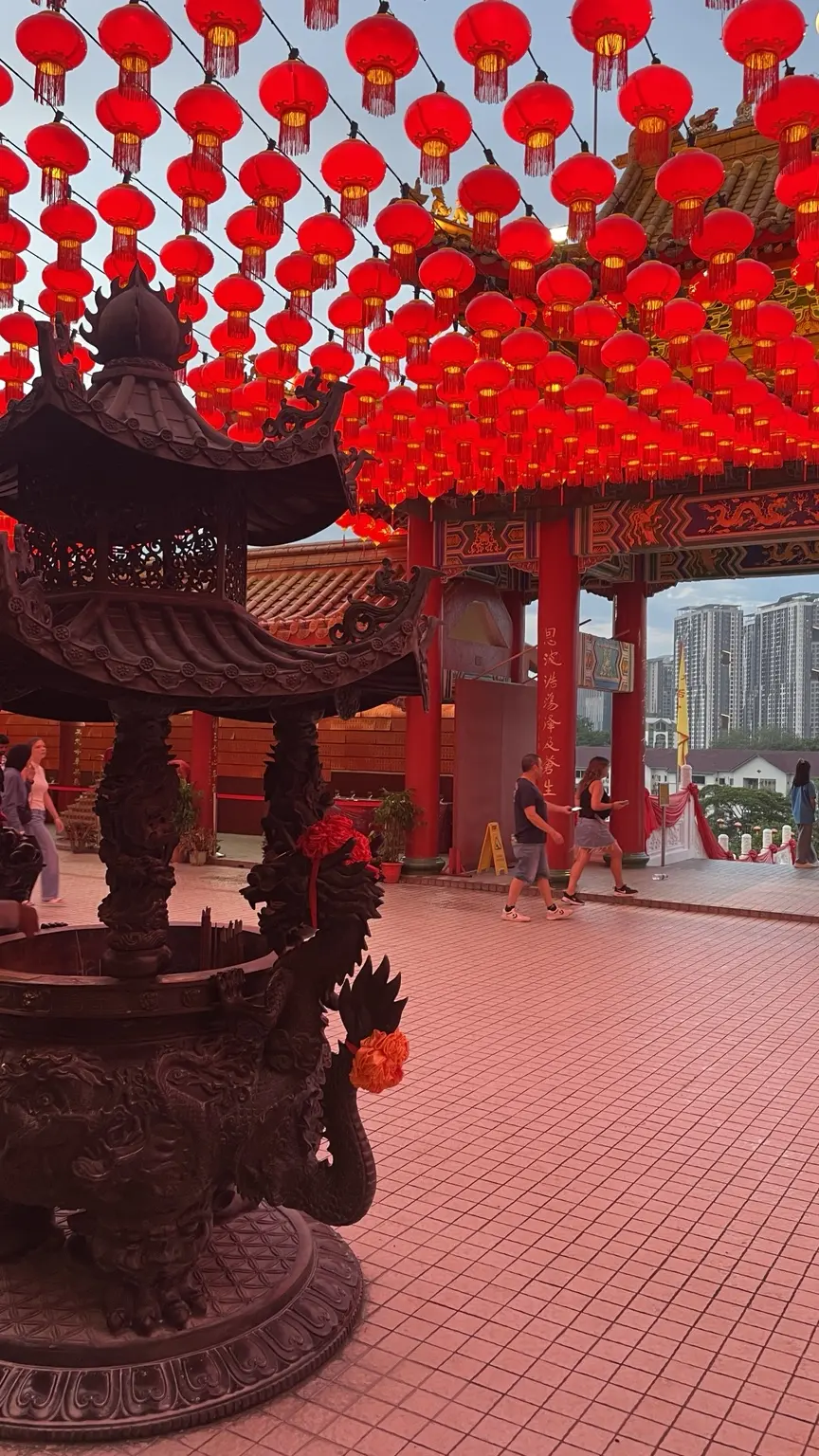
For sunset, we went to Thean Hou Temple. It looked particularly beautiful after dark when the many red lanterns lit up. Dinner at Gui Gui Korean Barbecue nearby was excellent, and a staff member patiently showed us how everything worked despite the language barrier. We ended the night at the speakeasy Cabinet 8.
Day 14: Back through Singapore and my verdict
We flew back to Singapore the following morning and spent the time before our flight home at Changi Airport and the connected shopping centre. Watching the indoor waterfall, eating one last meal and wandering around the terminals made a long connection surprisingly easy.
The order of this route worked extremely well for us: Singapore’s energy first, then Borneo’s intense wildlife experiences, a genuine pause by the sea and Kuala Lumpur at the end. The stages are very different, but longer stays kept the trip from feeling rushed.